Dispatch from the motorhome
Burnt Tips, Relays, and a Suspicious Gap
The Rock Port Welcome Center in Missouri turned out to be a good place to spend the night, once I’d sorted out the parking lanes. There was a little truck noise, but nothing that made me regret stopping. I pulled out around 8:15 Saturday morning in light rain, with a much more compelling destination than another stretch of interstate: Kansas City barbecue.
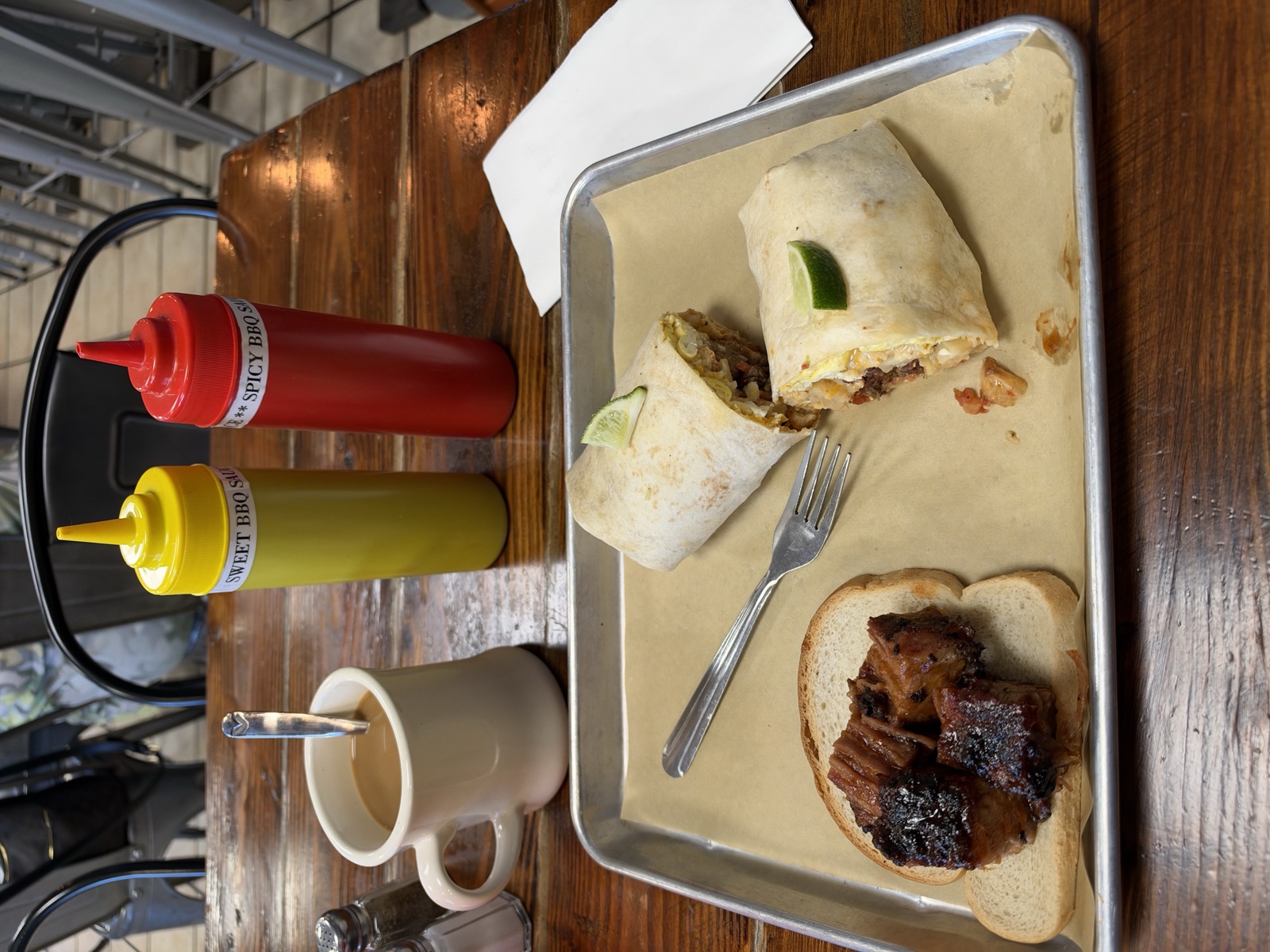
I’d been debating whether to push all the way to Kansas City the previous night, largely because I didn’t want to arrive so late that the only barbecue left was whatever happened to be open. This morning’s plan involved Scott’s and a burnt-tip burrito. By the time I reached my next stop, I could at least report a belly full of burnt tip. A successful start, especially considering that yesterday’s dinner plans had been mostly theoretical.
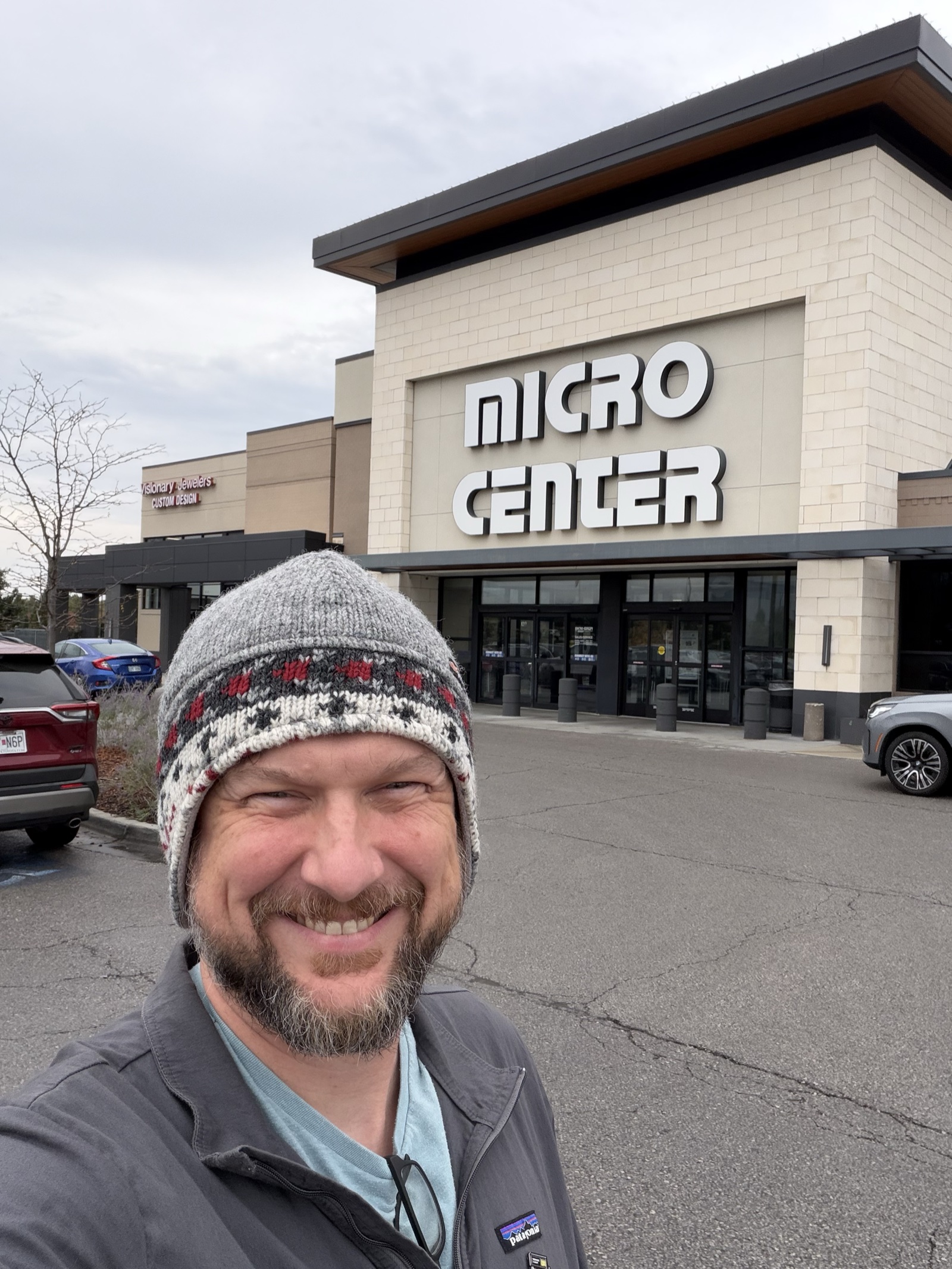
My next stop was Micro Center in Overland Park. The idea was to look at inexpensive hardware for automating the RV, which is a perfectly reasonable thing to do after spending the better part of the past month turning the motorhome into a rolling electrical project. I looked at Raspberry Pis, small PCs, sensors, networking gear, and relay boards. One concrete acquisition was a Waveshare ESP32-S3 board with six relays and built-in Wi-Fi and Bluetooth. That’s enough to get me started experimenting without needing a full computer just to turn something on.
The immediate idea is to use it to switch the Fosi amplifier between the RV’s living-area speakers and the cab speakers. Then, naturally, I started thinking about controlling the lights, the inverter’s remote switch, and whatever else might benefit from a button or a dashboard. There was a discussion of using a separate inexpensive relay for the speaker wiring, which could free up more of the six channels. At one point a much more expensive commercial speaker selector was suggested. I had to point out that just because I’m willing to contemplate a four-thousand-dollar AI computer doesn’t mean I want to buy a speaker switch that costs more than the amplifier. For now, the plan is to experiment with the hardware I already bought.
I fueled up at Riley’s Full Service in Overland Park just before leaving. Two transactions at $3.899 a gallon put 47.458 gallons in the tank for $185.04. The odometer read 67,400.1. At 3:26 in the afternoon I was heading south, announcing that I was off to Arkansas. As it turned out, Missouri still had a few things to show me first.
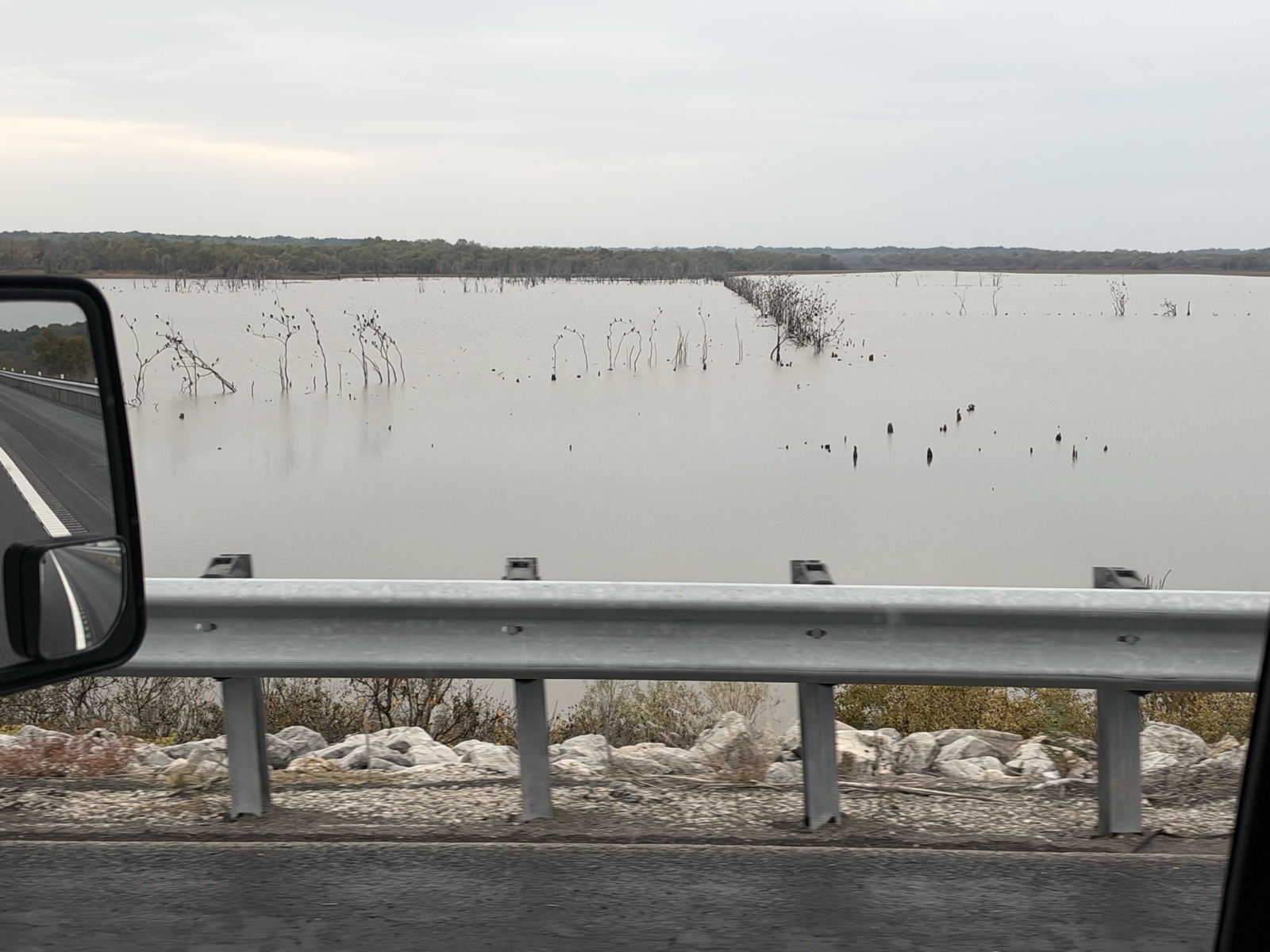
On Highway 13, I crossed Harry S. Truman Reservoir and noticed a surprising number of tree stumps sticking out of the water. It led to a little roadside investigation into why the trees were left there when the reservoir was created, and whether anyone could safely water-ski around them. The answer appears to be that the open water and the flooded timber are very different propositions. I’m content to observe the distinction from a bridge.
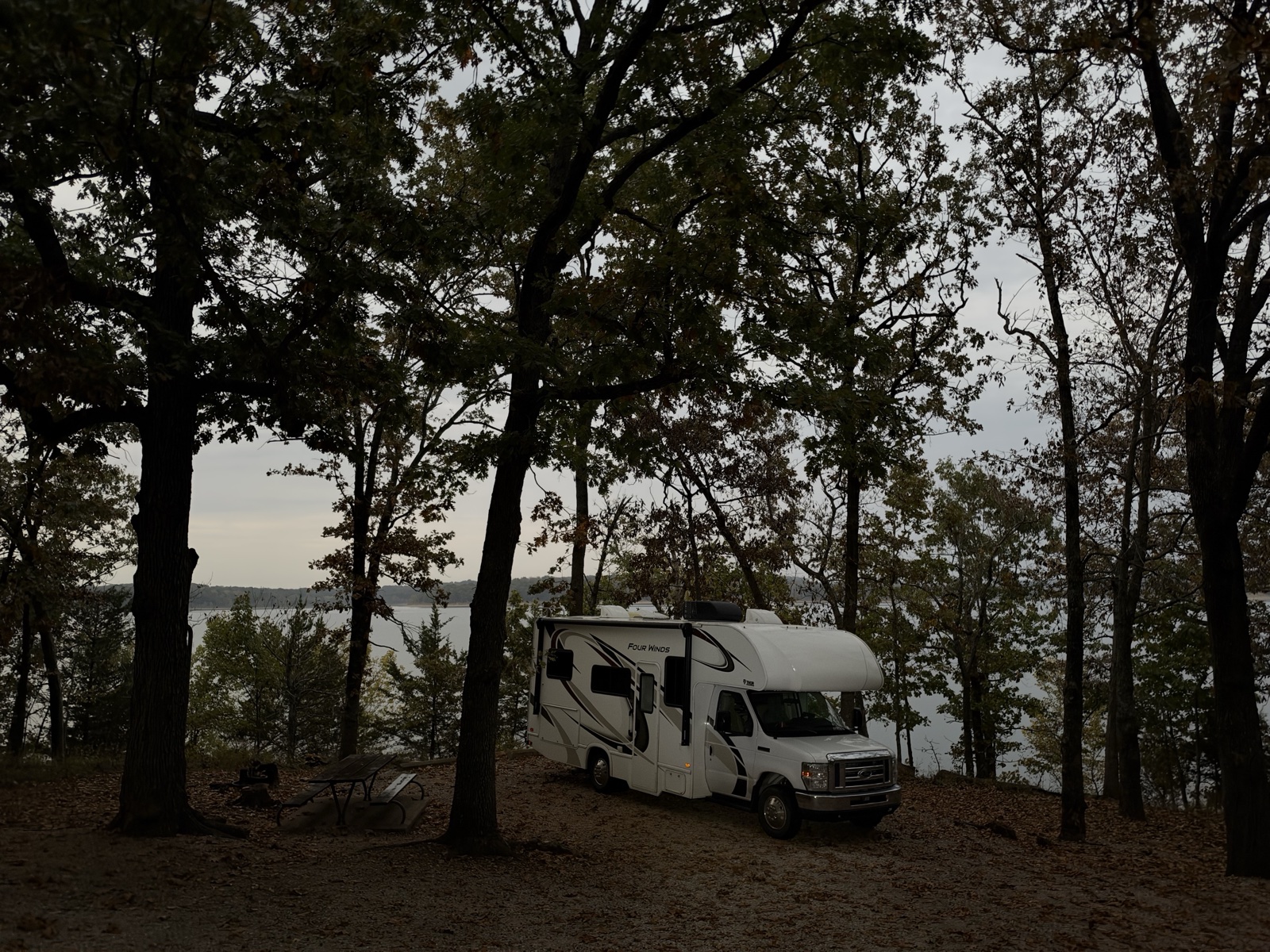
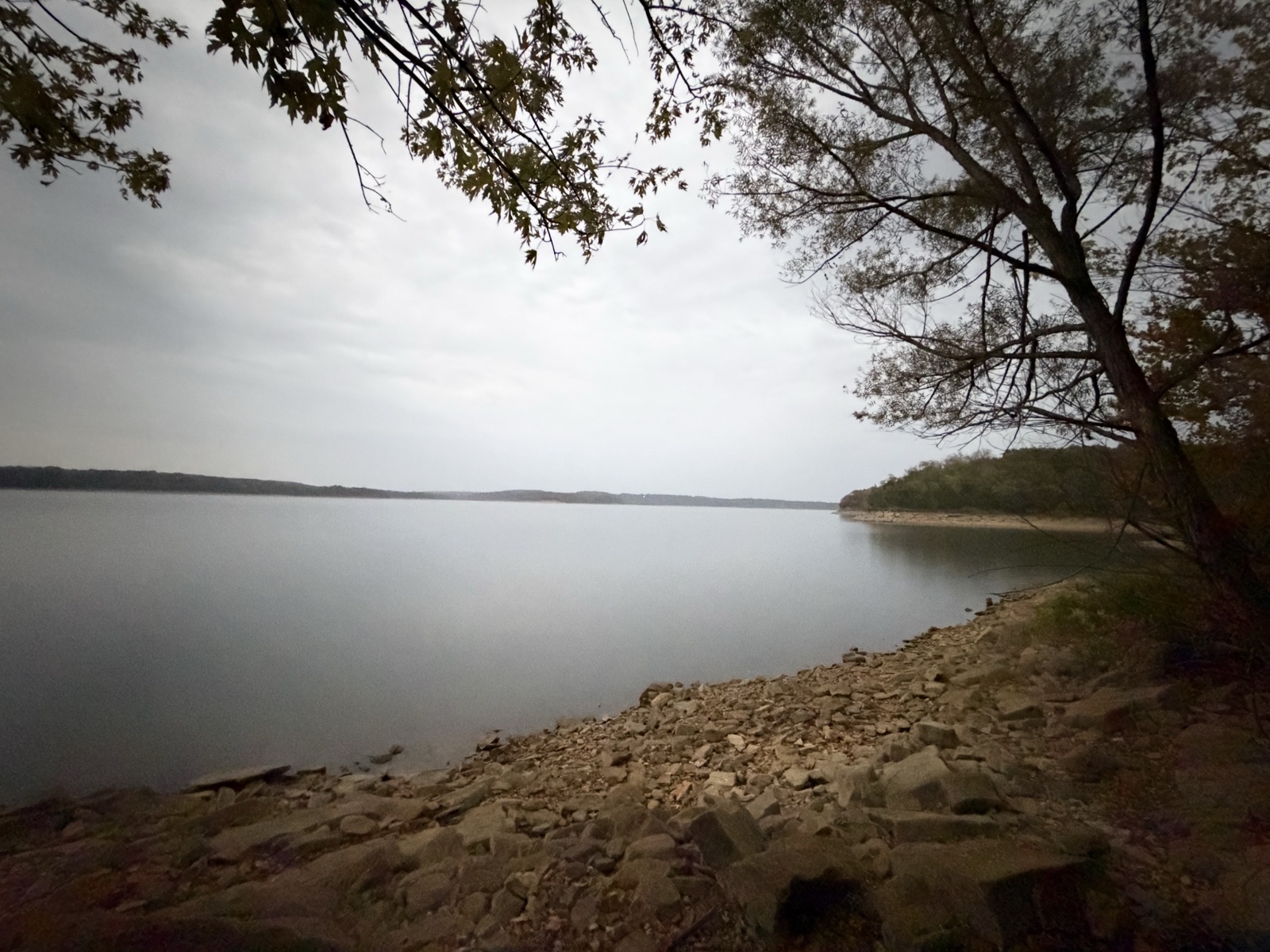
I was still weighing how far to drive. The campground I’d originally been considering was far enough away to mean arriving after dark, and I wouldn’t have minded finding somewhere scenic a little sooner. Cedar Ridge on Stockton Lake emerged as a better option. The navigation estimate was around 6:05, close to sunset, and Recreation.gov showed almost every site available. That’s one of the advantages of traveling after the main camping season: I can choose between sites instead of competing for the privilege of parking six feet from someone else’s slide-out.
I decided to drive straight there and choose a site before committing to a reservation. A one-night reservation was subsequently confirmed for site A04, at the rather appealing price of ten dollars. It is a non-electric site, and the campground’s water and waterborne facilities are shut down for the shoulder season. I don’t have a recorded arrival time, so I’ll leave that detail out rather than pretend the reservation itself proves when I parked.
The evening also produced a less relaxing project. I’ve been examining a gap where the cabover structure meets the driver’s-side wing wall, and the closer I looked, the less I liked it. The gap isn’t uniform. It tapers toward a tight fit at the outside, while the rubber P-gasket looks mangled. Three holes in the aluminum look crudely torn or hacked out, not cleanly drilled. The screws appear relatively new, but they bite into the wood without meaningfully grabbing the aluminum. Pulling the wall back produces essentially no resistance from them.
I used a borescope to look into the joint and could see its light from outside the RV. That established something more useful than a theory: there’s an opening through the joint. My working suspicion is that the pieces were once fitted together, something disturbed the connection, and the damaged holes were enlarged before the screws went back in. But that’s still a theory, not a proven repair history. The plywood doesn’t generally feel rotten to me, although I did find a soft spot on the cabover roof. That’s a separate concern I can’t dismiss.
The fact that this motorhome was previously in the Cruise America rental fleet, something that wasn’t disclosed when I bought it, doesn’t make the mystery any more comforting. I also compared the wallpaper and valances with brochure examples and found differences, although fleet-specific interiors could explain some of that without any repair having occurred.
I started Saturday with a successful overnight stop, barbecue, and a new little electronics project. I ended it inspecting torn aluminum and wondering exactly how the front of my motorhome is supposed to stay attached. The relay board might eventually save me the trouble of walking across the RV to change speakers. The cabover, on the other hand, may require me to get considerably more involved.

Replies